
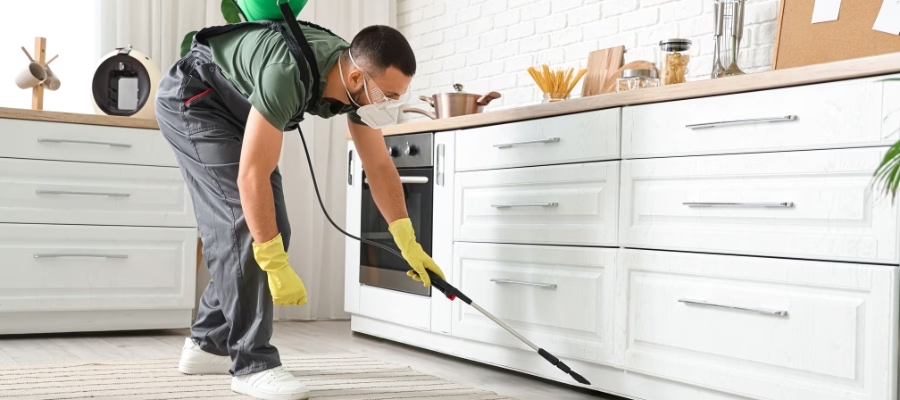
When pests invade your home, your first instinct is to eliminate them quickly. But if you have young children, that urgency comes with a legitimate concern—are the treatments safe for your family? Traditional pest control often relies on harsh chemicals that pose risks to children who crawl on floors, put their hands in their mouths, and spend hours playing in treated areas.
That’s exactly why Wipe Out Pest Control has spent over 20 years perfecting methods that eliminate pests effectively without compromising your family’s health. We’ve gathered extensive data on child safe pest control to develop treatments that target pests while minimizing exposure to the children and pets who matter most. Let’s protect your home from pests and your family from unnecessary chemical risks.
Why Child Safe Pest Control Matters
Children aren’t just small adults—their bodies process chemicals differently, and their behaviors put them at greater risk of exposure. Kids spend more time on floors where pesticide residues settle, they touch everything and frequently put their hands in their mouths, their developing bodies are more vulnerable to chemical exposure, and they breathe faster, inhaling more air (and potential contaminants) per pound of body weight than adults.
Traditional pest control often uses broad-spectrum pesticides applied liberally throughout homes. While effective at killing pests, these chemicals can linger on surfaces for days or weeks. For families with young children, this creates ongoing exposure risks that many parents don’t fully understand until after treatment.
Common Pest Control Chemicals to Avoid Around Children
Not all pest control products carry equal risks, but certain chemicals raise particular concerns for families with young children.
Organophosphates and Carbamates
These older classes of insecticides affect the nervous system and can cause serious health effects with significant exposure. While largely phased out of residential pest control, some companies still use them for certain applications. Children are especially vulnerable to these chemicals due to their developing nervous systems.
Pyrethroids
Synthetic versions of natural pyrethrin, pyrethroids are common in many pest control products. While generally considered safer than older chemicals, they can still cause allergic reactions, respiratory irritation, and neurological symptoms in some children, especially with repeated or high-level exposure.
Rodenticides
Rat and mouse poisons pose extreme dangers to children. Even “pet-safe” or “tamper-resistant” bait stations can be accessed by determined toddlers. Accidental ingestion requires immediate emergency care and can cause life-threatening internal bleeding.
Foggers and Bug Bombs
Total-release foggers coat every surface in your home with pesticide residue—including toys, countertops, bedding, and floors where children play. The chemicals remain on these surfaces long after application, creating ongoing exposure risks that far outweigh their questionable effectiveness.
What Makes Pest Control Child Safe?
Truly child safe pest control involves more than just choosing “natural” products—it requires a comprehensive approach that minimizes risks at every step.
Low-Toxicity Product Selection
We prioritize products with minimal toxicity to humans and pets while maintaining high effectiveness against target pests. This means:
- Using botanical-based products when appropriate
- Targeting specific pests rather than applying broad-spectrum chemicals
- Choosing products that break down quickly after application
- Avoiding persistent chemicals that remain active for extended periods
Targeted Application Methods
Rather than spraying entire rooms or homes, child safe pest control focuses treatments precisely where pests live and travel. We treat cracks and crevices where pests hide, apply products in areas children can’t access, use bait stations in secure locations, and create exterior barriers that stop pests before they enter.
This targeted approach dramatically reduces the amount of product used and limits exposure to treated areas.
Integrated Pest Management (IPM)
IPM emphasizes non-chemical methods as the foundation of pest control:
- Prevention through exclusion, sealing entry points, and eliminating food sources
- Monitoring to identify pest activity early before populations explode
- Mechanical controls like traps and physical barriers
- Chemical treatments only when necessary and in the safest manner possible
By addressing why pests are present—not just killing the ones you see—IPM reduces the need for repeated chemical applications.
Clear Communication and Safety Protocols
Child safe pest control companies provide detailed information about products used, specific instructions for protecting children during and after treatment, realistic timeframes for when areas are safe to use, and honest assessments of risks versus benefits for different treatment options.
At Wipe Out Pest Control, we never pressure families into treatments they’re uncomfortable with, and we always offer the safest effective option for your specific pest problem.
Ask Yourself: Does Your Current Pest Control Company Prioritize Safety?
Before your next pest control service, consider these important questions:
✓ Does the company explain which specific products they’re using and why?
✓ Do they offer child safe pest control alternatives, not just standard treatments?
✓ Can they tell you exactly how long children should stay away from treated areas?
✓ Do they provide written safety information about the products they apply?
✓ Are technicians willing to adjust treatments based on your family’s specific concerns?
✓ Does the company prioritize prevention and exclusion over repeated chemical applications?
If you answered “no” to any of these questions, it might be time to find a pest control provider who takes your family’s safety as seriously as pest elimination.
Common Pests and Child Safe Treatment Options
Ants
Ants are among the most common household pests, and fortunately, they respond well to low-toxicity treatments. We use gel baits placed in areas children can’t reach, exterior barrier treatments that stop ants before they enter, non-toxic diatomaceous earth in wall voids and hidden areas, and exclusion techniques that seal entry points permanently.
Pro tip: Keep counters clean and store food in airtight containers. Eliminating food sources makes your home far less attractive to ants, reducing the need for chemical treatments.
Spiders
Spider control focuses heavily on exclusion and habitat modification rather than chemical spraying throughout your home. Our approach includes sealing entry points where spiders enter, removing webs and egg sacs physically, treating exterior perimeters to create barriers, and addressing moisture and insect problems that attract spiders.
Most spider treatments can be applied in areas children don’t access, minimizing exposure while effectively controlling populations.
Rodents
Rodents require special attention in homes with children because traditional rodenticides pose serious poisoning risks. Child safe rodent control emphasizes trapping rather than poison, exclusion work to seal entry points, sanitation improvements that eliminate food sources, and monitoring to catch problems early before populations explode.
At Wipe Out Pest Control, we use secure trapping methods in locations children can’t access, and we never rely on poison baits in homes with young children.
Cockroaches
Cockroach control can be achieved safely using gel baits applied in cracks and crevices, boric acid dust in wall voids (not accessible areas), insect growth regulators with low mammalian toxicity, and comprehensive sanitation and exclusion measures.
These methods eliminate cockroaches without exposing children to sprayed pesticides on floors and countertops.
Termites
Termite control often raises concerns because treatments can be extensive. However, modern termite control offers child safe options including liquid termiticides with low toxicity profiles, baiting systems that eliminate colonies without spraying, localized treatments for small infestations, and heat treatments that use no chemicals at all.
We’ll explain all available options and help you choose the safest, most effective treatment for your specific situation.
Safety Protocols During and After Treatment
Even with child safe pest control products, proper protocols protect your family during treatment.
Before Treatment
- Remove children’s toys, bottles, and personal items from treatment areas
- Cover or remove pet food and water bowls
- Clear access to baseboards, corners, and areas needing treatment
- Inform the technician about any specific health concerns or sensitivities
During Treatment
Children and pregnant women should leave the home during active treatment. While our products are low-toxicity, avoiding exposure during application provides an extra safety margin. Pets should also be removed or secured away from treatment areas.
After Treatment
Wipe Out Pest Control provides specific instructions for each treatment, but general guidelines include allowing treated areas to dry completely, ventilating the home by opening windows, wiping down surfaces children touch frequently, and waiting the recommended time before allowing children back (typically 2-4 hours for most treatments).
We always provide written instructions so you know exactly what to expect and when your home is safe for your family’s return.
Pro tip: Schedule pest control treatments in the morning so chemicals have maximum time to dry and dissipate before children return home in the afternoon. This simple timing adjustment adds an extra layer of safety.
Why Families Trust Wipe Out Pest Control
When your children’s health is at stake, you need a pest control company that genuinely prioritizes safety over shortcuts.
Over 20 Years of Child-Focused Expertise
Since 2003, we’ve specialized in child safe pest control for Orange County families. We understand that effective pest elimination and family safety aren’t opposing goals—they’re equally important priorities that can be achieved simultaneously with the right approach.
Ongoing Training in Low-Toxicity Methods
Our technicians receive continuous training in the latest low-toxicity products and application methods. We stay current with research on child safety and environmental health, ensuring our methods reflect the most recent scientific understanding.
Fully Licensed, Insured, and Certified
We maintain all required California certifications for structural pest control and carry full insurance. Our commitment to safety extends beyond just product selection—it encompasses every aspect of how we work.
Parents Protecting Parents
Most importantly, we’re parents too. We understand your concerns because we have the same ones about our own families. We’ll never apply anything in your home that we wouldn’t use in our own.
Protect Your Home and Your Family
You shouldn’t have to choose between living with pests and exposing your children to harsh chemicals. Modern child safe pest control provides effective solutions that eliminate pests while protecting the health of your most precious family members.
Don’t settle for pest control companies that dismiss your safety concerns or offer only one-size-fits-all treatments. Partner with Wipe Out Pest Control for comprehensive pest elimination using methods specifically designed to keep your children safe. Schedule your free consultation today and discover how we can protect your home without compromising your family’s health.
Frequently Asked Questions
Are “natural” or “organic” pest control products always safer for children?
Not necessarily. “Natural” doesn’t automatically mean safe—many natural substances can be toxic (think poison ivy or rattlesnake venom). What matters is the specific toxicity profile, application method, and exposure risk. Some synthetic products are actually safer for children than certain natural alternatives. Always ask about specific products and their safety data rather than relying on marketing terms like “natural” or “green.”
How long after pest control treatment can my children safely return home?
This depends on the specific products and application methods used. For most of our child safe pest control treatments, children can return after 2-4 hours once treated areas have dried completely. We provide specific written instructions for each treatment. Never return before the recommended time, and always ventilate the home thoroughly before children re-enter.
Can pest control companies effectively eliminate pests without using harsh chemicals?
Yes. Modern pest control emphasizes Integrated Pest Management (IPM), which relies primarily on exclusion, sanitation, monitoring, and mechanical controls. Chemical treatments are used strategically when necessary, but they’re not the primary approach. Companies claiming you can’t control pests without heavy chemical use are either uninformed or prioritizing their convenience over your family’s safety.
What should I do if my child is exposed to pest control chemicals?
First, move your child away from the exposure source immediately. For skin contact, wash the area thoroughly with soap and water. For eye contact, flush with water for at least 15 minutes. If your child ingests pest control products or shows symptoms like difficulty breathing, excessive drooling, vomiting, or altered consciousness, call 911 immediately. Keep the product label or name handy to provide to medical personnel. For less severe concerns, contact Poison Control at 1-800-222-1222.
Do you offer child safe pest control for all types of pests?
Yes. Every pest problem has child safe treatment options, though the specific methods vary by pest type. Some pests (like ants and spiders) require minimal chemical intervention. Others (like termites) may require more extensive treatment, but we still offer the lowest-toxicity effective options and always explain the risks and benefits of each approach so you can make informed decisions.
How often do I need pest control treatments with child safe methods?
Treatment frequency depends on the pest type, severity of infestation, and your property’s conditions. Generally, child safe pest control using IPM principles requires less frequent chemical treatments than traditional approaches because we address root causes rather than just killing visible pests. Most homes benefit from quarterly monitoring and treatment as needed, rather than scheduled monthly sprayings that were common with older pest control methods.