
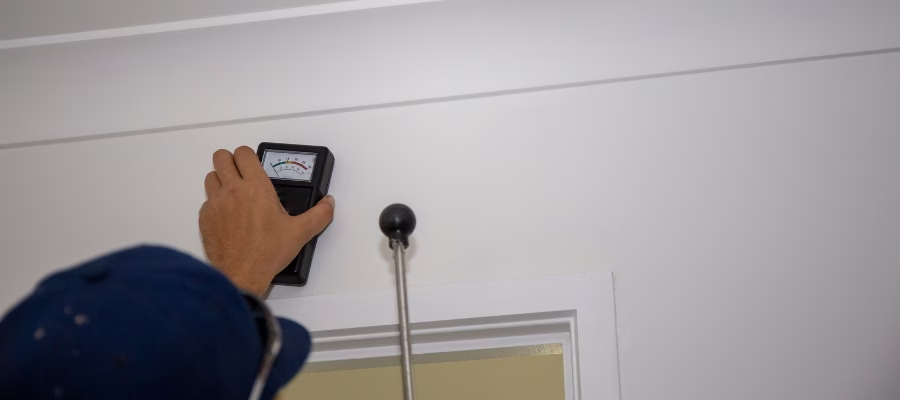
When you live in Orange County, it’s easy to go about life without giving termites a second thought—until you suddenly discover they’ve been busy inside your walls. These tiny pests stay hidden while causing real trouble, weakening wood, damaging framing, and leaving you with a hefty repair bill before you ever see a trace. If that hits close to home, many homeowners have felt the same way.
At Wipe Out Pest Control we keep properties safe from termite damage. As a local, family-run team with deep roots in the community, we combine expert knowledge with friendly, dependable service. If you’re wondering whether your home is at risk (or how to keep it termite-free) you’re in the right place.
The Two Termites You’ll Meet in Orange County
In Orange County, termites are a real, year-round concern, especially with our warm, dry climate and wood-framed homes.
Two main types of termites are responsible for damage in this region: Subterranean termites and Drywood termites. Both are active in different ways, both can spread without being noticed, and both can cause serious problems for homeowners if they’re not addressed early.
Subterranean Termites
Subterranean termites are the most destructive species in Orange County. They live underground and build large colonies that depend on moisture to survive. These termites typically enter your home from the soil, making their way in through foundation cracks, plumbing penetrations, and any area where wood touches the ground.
They create mud tubes to protect themselves from air and light as they move between their nest and your home. These tubes are often found along foundation walls, crawlspaces, and basement support beams. Once inside, they start feeding on wood from the inside out, often staying hidden until the damage is extensive.
Subterranean termites tend to be most active during the spring and summer months, especially after rain. During this time, you may notice swarmers—winged termites that leave the colony to start new ones. Swarmers don’t do damage themselves, but if you see them inside or around your home, it’s a strong indication that a colony is nearby.
Homes with poor drainage, leaky plumbing, or wood-to-soil contact are at higher risk for infestation. Subterranean termites move efficiently and can create large networks beneath the surface, which makes early detection and treatment essential.
Drywood Termites
Drywood termites behave differently. They don’t need soil or moisture to survive. Instead, they live entirely within the wood they consume: furniture, rafters, framing, even picture frames. Because they don’t rely on outside contact, infestations can occur far above ground level, including in attics, eaves, and upper floors.
They’re typically slower-moving than subterranean termites, but they’re harder to detect. There are no mud tubes with drywood termites. Most homeowners only realize there’s a problem when they spot frass; tiny, pellet-like droppings that drywood termites push out of small holes in the wood. The damage tends to be internal and can go unnoticed for years.
Swarming for drywood termites usually happens in late summer or fall. You might see winged termites near light fixtures or window sills. Like with subterranean termites, these swarmers are a warning sign. Once inside, they form small colonies that slowly expand over time.
Older homes with exposed wood or untreated framing are more likely to experience drywood termite problems. These termites can survive in very small pieces of wood, making even isolated infestations worth inspecting. Left untreated, they can weaken structures and create safety risks, especially in roofs, attics, and upper floors.
How to Tell the Difference Between Subterranean and Drywood Termites
Spotting the difference between subterranean termites and drywood termites makes a big difference in how you handle the problem. Here’s what you’ll notice with each type:
Subterranean Termites:
- They build mud tubes. You’ll often find these pencil-sized tunnels running up your foundation, inside crawlspaces, or along walls. It’s their way of staying moist and protected as they move between soil and wood.
- Damage from these termites usually starts low, close to where your home touches the ground, like floor joists, support beams, or lower walls.
- Subterranean termites need plenty of moisture. Homes with leaky pipes, damp crawlspaces, or poor drainage attract them.
- You’ll see swarmers (the winged termites) mostly in spring or early summer, usually after it rains.
Drywood Termites:
- No mud tubes. Drywood termites don’t need soil—they live completely inside wood.
- You’ll see small piles of what looks like sawdust—this is their droppings, called frass. If you notice these under window sills, on furniture, or along baseboards, it’s a sign.
- Infestations can start anywhere—attics, rafters, even in your furniture. They don’t rely on ground contact.
- Swarmers for drywood termites appear later in the year, usually in late summer or fall. Look for discarded wings by windows or light sources.
- Damage is often hidden deep inside wood. You might only notice when wood sounds hollow or starts to weaken.
Understanding these clues helps you know what kind of termite you’re up against. If you’re ever unsure, a professional inspection from an experienced local company can quickly get you the answers you need.
Can Termites Wreck Your House?
Termite damage goes way beyond what you can see on the surface. For Orange County homeowners, these pests can be a real threat to your biggest investment. The effects can show up slowly at first, and by the time the warning signs are obvious, repairs are often extensive and expensive.
Most homeowners first notice the problem when something in the house suddenly seems off. Maybe a floor feels bouncy, a door no longer closes, or paint begins to bubble for no clear reason. By the time you see those signs, termites may have been eating away at your home for months, or even years.
Why Homeowners Insurance Rarely Covers Termite Damage
Many homeowners assume insurance will cover unexpected surprises. Termite damage usually isn’t one of them. Most insurance policies view termite damage as a preventable maintenance issue rather than a sudden accident or disaster.
Insurance companies expect homeowners to keep up with regular maintenance, and termite control falls into that category. Since these pests can go undetected for a long time and are considered part of routine property upkeep, most policies exclude them from coverage. When termite damage surfaces, repairs are often paid out of pocket.
Without coverage, even a minor infestation can put a serious dent in your wallet. Costs can climb quickly, especially when infestations go undetected for long periods. This is why annual inspections and preventive treatments become so important.
Common Signs of Termite Damage
Termites leave evidence behind as they go about their work. These are some of the warning signs you might notice:
- Sagging or uneven floors, often described as “spongy” when you walk across them.
- Beams or support structures that sound hollow when tapped.
- Cracks or bubbling in drywall and paint.
- Sticking doors or windows, caused by shifting frames.
- Piles of termite droppings or frass near baseboards or windowsills.
- Small holes in drywall or wood surfaces.
Even one of these signs can mean termites have been active for a while. If you’re seeing more than one, it’s time to act before things get worse.
Wipe Out Pest Control: 20+ Years of Trusted Service in Orange County
Pest problems can happen to anyone, and when they do, Orange County homeowners turn to a name they know and trust. Wipe Out Pest Control has built a reputation for reliable, friendly, and expert service for over two decades. Local families know they can count on us to solve problems efficiently and with a personal touch.
We believe in doing things right—keeping your home pest-free with proven methods, putting your safety first, and treating every customer like family. Our team has spent years learning what works in Orange County’s unique environment, and it shows in every inspection, every treatment, and every satisfied client.
Over 20 Years of Local Experience
When it comes to pest control, experience matters. Wipe Out Pest Control brings more than 20 years of local expertise to every job. We’ve seen how pests behave through Orange County’s hot summers, rainy winters, and everything in between. This firsthand knowledge helps us catch problems early and recommend solutions that last.
A Team of Highly Trained, Licensed Experts
Pest control requires skill, up-to-date knowledge, and a commitment to safety. Our team is fully licensed, highly trained, and stays current with the latest industry standards. Each technician brings a careful, detail-oriented approach to your home.
We invest in regular training so that our staff is equipped to handle anything, whether it’s a hidden termite colony or a persistent rodent problem. From inspections to treatments, you can expect professionalism and thoroughness every step of the way.
Safe, Effective Products for Your Family and Pets
Safety always comes first. The products we use are selected for their effectiveness and are always applied according to strict safety guidelines. If you have children, pets, or sensitive family members, you can feel confident choosing us.
- All products used according to label instructions
- Our methods target pests—without disrupting your home environment
- Preventive options to stop pests before they start
Peace of mind is part of every service we provide.
Comprehensive Services for Orange County Homes
Wipe Out Pest Control doesn’t just focus on termites. We tackle over 50 different types—including ants, rodents, spiders, cockroaches, earwigs, and more. Our residential pest control is designed to address the full range of pest issues you might encounter.
We include both interior and exterior treatments, provide rodent control, remove unsightly cobwebs, and offer appointment reminders for your convenience. Services are customizable based on your needs, whether you need a one-time treatment or ongoing protection.
We take our commitment to the Orange County community seriously. As a local business, we care about the health and safety of the neighborhoods we serve. When you choose us, you’re supporting a team that’s part of your community, understands your concerns, and values your trust.
It’s Time to Wipe Out Termite Worries
When it comes to termite inspection in Orange County, your home deserves the highest level of protection and care. Termites can cause serious damage before you even realize they’re there, but with regular inspections and the right team on your side, you can prevent costly repairs and keep your home safe and sound.
Let’s help you get real peace of mind—our friendly, experienced crew is ready to help you take action today. Call or text us at 714-720-3422, email office@wipeoutpestcontrol.com, or fill out our quick contact form here to schedule your consultation.
FAQs
How often should I get a termite inspection in Orange County?
It’s a smart move to schedule a professional termite inspection at least once a year, especially in Orange County’s warm climate where termites are active most of the year. Annual inspections catch problems early, often before any major damage happens, giving you peace of mind and saving you money on repairs.
What signs might suggest I have termites in my home?
Keep an eye out for mud tubes near your foundation, discarded wings by windows, wood that sounds hollow when tapped, bubbling paint, or small piles of droppings that look like sawdust. Any of these can signal termites are present and it’s time for a professional to take a closer look.
Can I get help for other pests, too?
Yes! Wipe Out Pest Control handles more than just termites. We take care of ants, rodents, spiders, cockroaches, and over 50 other common household pests—inside and outside your home—with the same expertise and thoroughness.
What should I expect after scheduling my first visit?
Once you book your inspection or service, you’ll receive appointment reminders. Our technician arrives on time, explains the process, and answers any questions you have. After the service, you’ll get a detailed report and, if needed, a follow-up plan tailored to your home.